

Knowing what not to put down the drain is the easiest way to avoid clogs, slow drains, and messy backups. The biggest troublemakers are hair, food scraps, cooking grease, and things like plastic and bones that never belonged in a pipe. Below you’ll find what to keep out, why drains back up, and a few simple habits that keep water flowing.
Why Drains Back Up in the First Place
Your drain pipes are designed to carry water, human waste, toilet paper, and small amounts of soap. Anything else can stick to the inside of the pipe and start to build up.
Most clogs don’t happen overnight. A thin layer of grease or soap scum catches a few hairs, those hairs catch food particles, and over weeks or months the opening gets smaller until water can’t get through.
Common signs a clog is forming include:
- Water draining slower than usual
- Gurgling sounds from sinks, tubs, or toilets
- Bad smells coming up from the drain
- Water backing up in one fixture when you use another
What Not to Put Down the Drain
These are the items plumbers pull out of clogged pipes most often. Keeping them out of your drains will prevent the majority of household clogs.
1. Hair
Hair is the number one cause of bathroom sink and shower clogs. It tangles easily and binds with soap residue to form a tough, stringy mass.
A simple hair catcher over your shower and tub drains stops most of it. Empty it into the trash after every shower or two.
2. Food Scraps
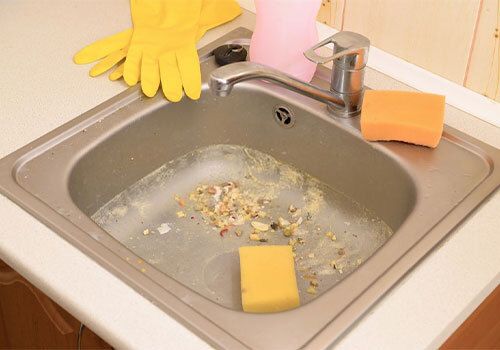
Even with a garbage disposal, many foods cause trouble. Starchy and fibrous foods are the worst offenders:
- Coffee grounds
- Rice and pasta, which swell with water
- Eggshells
- Potato peels
- Fibrous vegetables like celery and onion skins
Scrape plates into the trash or compost before rinsing them. If you have a disposal, feed it small amounts at a time and keep it clean with these garbage disposal cleaning tips.
3. Oil, Fat, and Grease
Grease is liquid when it’s hot, so it seems harmless going down the sink. As it cools inside your pipes, it hardens and coats the walls, trapping everything that comes after it.
Instead, let cooking grease cool in a can or jar, then throw it in the trash. Wipe greasy pans with a paper towel before washing them. Hot water and dish soap won’t flush grease far enough to keep it from setting up farther down the line.
4. Plastic Bags and Wrappers
Plastic doesn’t break down in water. Bags, produce stickers, wrappers, and bottle caps can wrap around disposal blades or snag inside pipes and collect debris.
5. Bones
Bones are too hard for most garbage disposals to grind fully. Pieces that do make it through can lodge in the trap or drain line and start a clog.
Other Things to Keep Out
- “Flushable” wipes: Many don’t break apart the way toilet paper does.
- Paper towels and tissues: They’re made to stay strong when wet.
- Cotton balls, swabs, and dental floss: These clump and tangle.
- Paint, solvents, and chemicals: These can harm pipes and the environment. Check local rules for proper disposal.
How to Prevent Drain Clogs
A few easy habits go a long way. Here’s how to keep drain problems off your to-do list.
Use Drain Covers and Strainers
Inexpensive mesh strainers and hair catchers are your first line of defense. Put one in every sink, shower, and tub, and empty them regularly.
Clean Your Drains Regularly
Once a week, run hot water through your sinks for a minute to help move soap and residue along. Every month or so, you can pour about half a cup of baking soda down the drain, follow it with a cup of vinegar, wait 15 minutes, and rinse with hot water.
Avoid relying on harsh chemical drain cleaners. They can be hard on older pipes and often don’t fully clear the clog.
Keep Problem Substances Away
Make it a household rule: grease goes in a can, food scraps go in the trash, and only toilet paper gets flushed. Share the list above with everyone in your home, including kids and guests.
Schedule Professional Drain Service
Even careful homeowners get some buildup over time. Professional drain cleaning clears what household methods can’t reach. If you get repeat clogs, a sewer camera inspection shows exactly what’s going on inside the line.
When to Call a Plumber
Some drain problems are more than a simple clog. Call a plumber if you notice:
- A clog that comes back after you’ve cleared it
- More than one drain running slow at the same time
- Water backing up into a tub or shower when you flush a toilet
- Sewage smells inside the house
- Water coming up from a floor drain in the basement
Multiple slow drains or backups usually point to a problem in the main line. If water is backing up, stop using your fixtures until the line is cleared. Learn more about our help for clogged drains and lines.
Local Drain Help in Royersford and Nearby
Avanti Plumbing & Drains is a family-owned plumber based in Royersford, serving homeowners across Montgomery and Chester County since 2006. Our licensed and insured technicians wear shoe covers, explain your options before any work starts, and leave the area clean. We offer same-day and after-hours service, 24/7.
Get Your Drains Flowing Again
If a slow drain or stubborn clog has you stuck, we’re here to help. Call us at (610) 489-2717 or book drain service online.
Frequently Asked Questions
Can I pour grease down the drain if I run hot water with it?
No. Hot water only moves grease a short distance before it cools and hardens inside the pipe. Let grease cool in a can or jar and throw it in the trash.
Is it OK to put coffee grounds down the garbage disposal?
It’s best not to. Coffee grounds don’t dissolve and can settle in the trap and drain line, where they clump together and cause clogs. Toss them in the trash or compost.
How often should I have my drains professionally cleaned?
Many homes do fine with occasional service, but if you have frequent clogs, older pipes, or large trees near your sewer line, regular professional cleaning can help prevent backups. A plumber can recommend a schedule after looking at your system.