
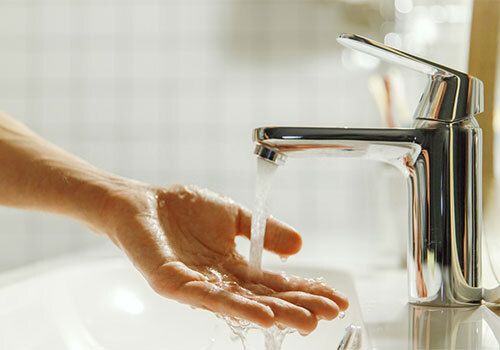
If your hot water is too hot, the cause is usually a thermostat set too high, a broken thermostat, a faulty heating element, or mineral build-up in the tank. The safe target for most homes is 120°F. Here is how to spot each problem, what you can safely check yourself, and when to bring in a pro.
Why Hot Water That Is Too Hot Is a Problem
Water that is too hot is more than uncomfortable. It is a real burn risk, especially for young children and older adults, who have thinner skin and may not pull away quickly.
At higher settings such as 140°F and above, hot water can cause serious burns in just seconds. At 120°F, the risk is much lower, which is why that setting is the common recommendation for homes.
Overheated water also wastes energy and puts extra strain on your water heater, which can shorten its life.
What Temperature Should Your Hot Water Be?
For most households, 120°F is the sweet spot. It is hot enough for bathing, dishes, and laundry while keeping the scald risk low.
- Check the dial: many gas heaters have a dial on the gas control. Some are marked with words like “warm” or “hot” rather than numbers, so check your manual.
- Test at the tap: run hot water at the faucet closest to the heater for a couple of minutes, then measure it with a kitchen thermometer.
- Give it time: after changing the setting, wait several hours before testing again.
If you have adjusted the setting and the water is still too hot, something inside the heater is likely not working the way it should.
3 Common Reasons Your Hot Water Is Too Hot
1. A Broken or Faulty Thermostat
The thermostat tells your water heater when to heat and when to stop. If it fails or loses calibration, the heater may keep heating well past the temperature you set.
Signs of a thermostat problem include water that is much hotter than the dial setting, or temperatures that swing from scalding to lukewarm. Electric heaters often have two thermostats, one for each element, and either can fail.
On electric models, the thermostats sit behind access panels next to live electrical parts. Replacing one is a job for a professional.
2. A Faulty Heating Element
Electric water heaters use heating elements to warm the water. Normally, the thermostat switches the element off once the water reaches temperature.
If an element or its control fails in a way that keeps it powered, the water can keep heating and get dangerously hot. A plumber can test the elements and thermostats and replace the part that has failed.
3. Mineral Build-Up in the Tank
Minerals in your water settle to the bottom of the tank as sediment. Over time, that layer can trap heat near the burner or lower element, causing uneven heating and hot spots.
Heavy sediment can also make the heater run longer and louder, and it can contribute to temperature swings at the tap. Flushing the tank about once a year helps keep build-up under control. Our water heater maintenance tips explain how.
Watch the Temperature and Pressure Relief Valve
Every tank water heater has a temperature and pressure (T&P) relief valve. It opens to release water if the tank gets too hot or the pressure gets too high.
If you see water dripping or spraying from the valve or its discharge pipe, the heater may be overheating. Never cap, plug, or remove this valve. It is a critical safety device.
What You Can Safely Do Right Now
- Lower the setting to about 120°F, following your manual.
- Warn everyone in the house to test water before using it, especially for children’s baths.
- Turn the heater off if the water is scalding. For an electric heater, switch off its breaker. For a gas heater, turn the gas control to off or pilot.
- Shut off the water supply to the heater if the relief valve is discharging.
Do not open electrical panels on the heater or attempt any gas valve or gas line work yourself. If you smell gas, leave the house and call your gas utility from outside.
Local Help in Royersford and Surrounding Areas
Avanti Plumbing & Drains is a family-owned, licensed and insured plumbing company in Royersford, serving homes across Montgomery and Chester County since 2006. We repair and replace both tank and tankless water heaters, and our trucks are fully stocked, so many repairs can be handled on the first visit.
When to Call a Plumber
Call a licensed plumber if:
- Your water stays too hot after you lower the setting
- The temperature swings between scalding and lukewarm
- The T&P relief valve is dripping or discharging water
- You hear loud popping or rumbling from the tank
- The heater is older and showing other signs it may need replacing
Our technicians will diagnose the problem, explain your options, and leave the work area clean when the job is done.
Is your hot water too hot? Do not wait for someone to get burned. Call Avanti Plumbing & Drains at (610) 489-2717, available 24/7, or schedule service online.
Frequently Asked Questions
What temperature should my water heater be set to?
Most experts recommend setting your water heater to 120°F. It is hot enough for showers and household use, lowers the risk of scalding, and can help reduce energy use. Check your owner’s manual for any manufacturer-specific guidance.
Why is my hot water suddenly scalding?
Sudden scalding water often points to a broken thermostat or a faulty heating element that keeps heating past the set temperature. Heavy sediment can also cause uneven heating. Turn the heater down or off and have a plumber check it.
Is it dangerous if my water heater relief valve is releasing water?
It can be a sign that the tank is getting too hot or building too much pressure. The valve is doing its safety job, but the cause needs attention. Do not cap or plug the valve. Shut off the heater and call a plumber.