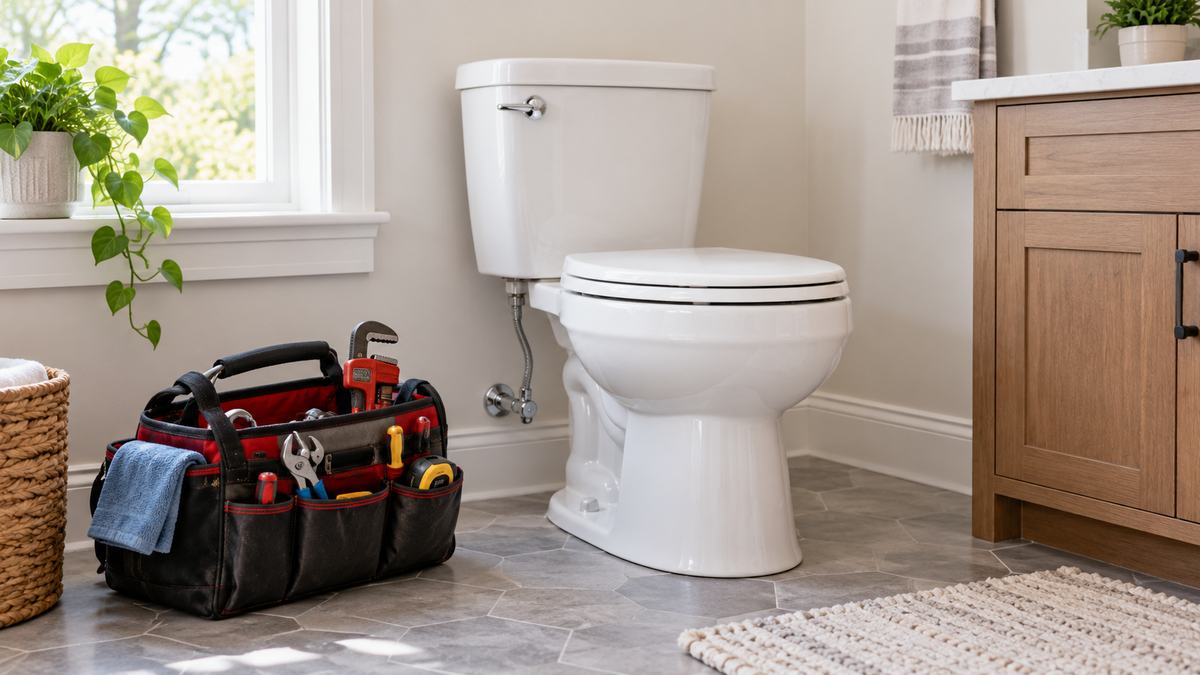
Replace a toilet when the porcelain is cracked, it clogs constantly, it keeps needing repairs, it rocks because the floor or flange is damaged, or it is an older model that uses far more water per flush than today’s toilets. Running tanks, weak flushes and small leaks from the tank are usually repairable with inexpensive parts.
Key takeaways
- Cracks in the bowl or tank mean replacement, not repair.
- Older toilets can use 3.5 gallons or more per flush; today’s standard is 1.6 gallons or less.
- Frequent clogs in a newer toilet may point to a drain problem, not the toilet.
- Running, phantom flushing and minor tank leaks are usually cheap repairs.
Signs It Is Time to Replace Your Toilet
1. Cracks in the porcelain
A hairline crack in the tank or bowl can suddenly give way and flood a bathroom. Cracks below the water line are especially risky. Porcelain cannot be reliably repaired.
2. It clogs all the time
Some early low-flow toilets simply do not flush well. If plunging is a weekly routine and the drain line is clear, a modern, well-designed toilet will usually solve it.
3. Constant repairs
If you have replaced the flapper, fill valve and flush valve and something still fails, the cost and hassle add up. A new toilet resets the clock.
4. It wobbles or leaks at the base
A rocking toilet can break the wax seal and let water soak into the subfloor. Tightening bolts or replacing the wax ring fixes many cases, but if the flange or floor is damaged, the repair and a new toilet often go together.
5. It uses too much water
Toilets made before the mid-1990s often use 3.5 gallons per flush or more. Today’s standard is 1.6 gallons or less, and many models use 1.28 gallons. In a busy household, the water savings add up. Read how low-flow toilets work and how much they save.
6. You are remodeling or need better accessibility
Comfort-height toilets, elongated bowls and easier-to-clean designs are good reasons to upgrade during a bathroom project.
Problems That Are Usually Worth Repairing
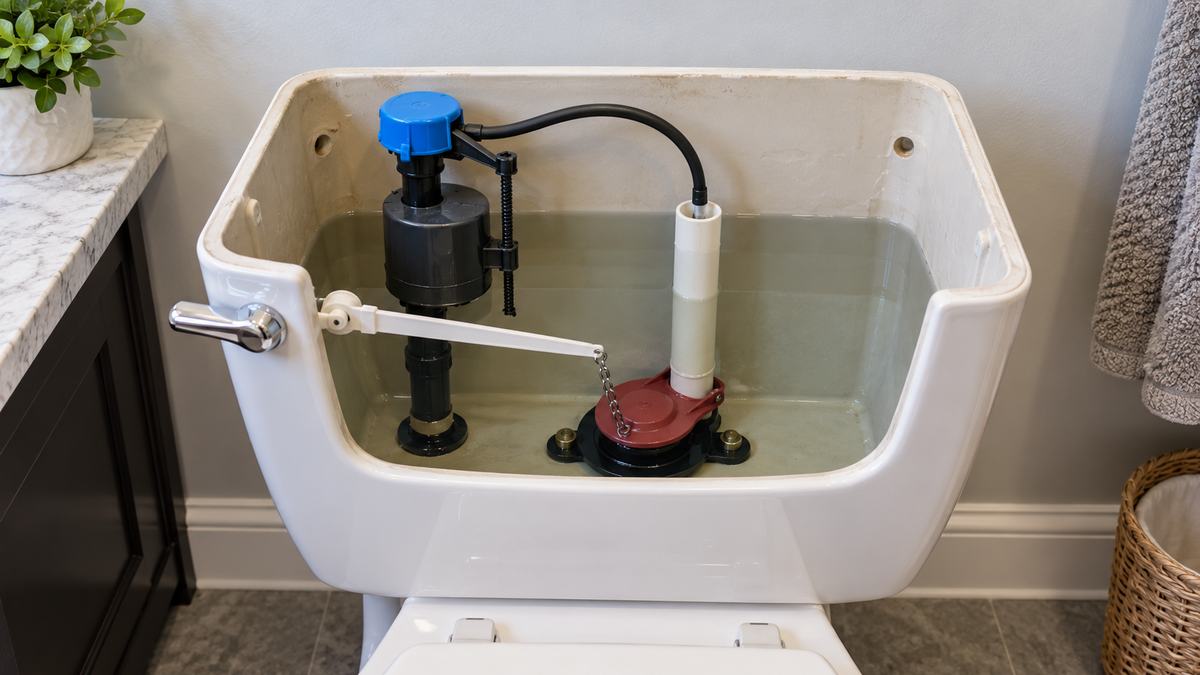
- Running or phantom flushing: flapper or fill valve. See why your toilet keeps running.
- Weak flush: chain adjustment, clogged rim jets or a partial clog
- Slow tank refill: fill valve or supply valve
- Loose seat or handle: inexpensive parts
- Leak at the base on a solid toilet: new wax ring and bolts
What to Know Before Buying a New Toilet
- Rough-in: measure from the wall to the center of the floor bolts. Most homes are 12 inches; some older homes are 10 or 14.
- Bowl shape: elongated is more comfortable; round saves space.
- Height: comfort-height models are easier for many adults.
- WaterSense label: identifies toilets that meet EPA efficiency and performance criteria.
Repair or Replace? We Will Give You a Straight Answer
Our plumbers handle toilet repair and installation, and we will tell you honestly when a repair is all you need. Call (610) 489-2717 any time, day or night, or book service online.
Frequently Asked Questions
How long does a toilet last?
The porcelain can last decades. Internal parts like flappers and fill valves wear out every several years and are easy to replace.
Is it worth replacing an old toilet to save water?
If it is an older model using 3.5 gallons or more per flush, a newer toilet can save a lot of water in a busy home.
Why does my new toilet keep clogging?
It could be the toilet design, but frequent clogs can also mean a partial blockage or venting problem in the drain line.
Can a plumber install a toilet I bought myself?
Ask when you book. Many plumbers will, as long as the toilet fits your rough-in and is a quality model.