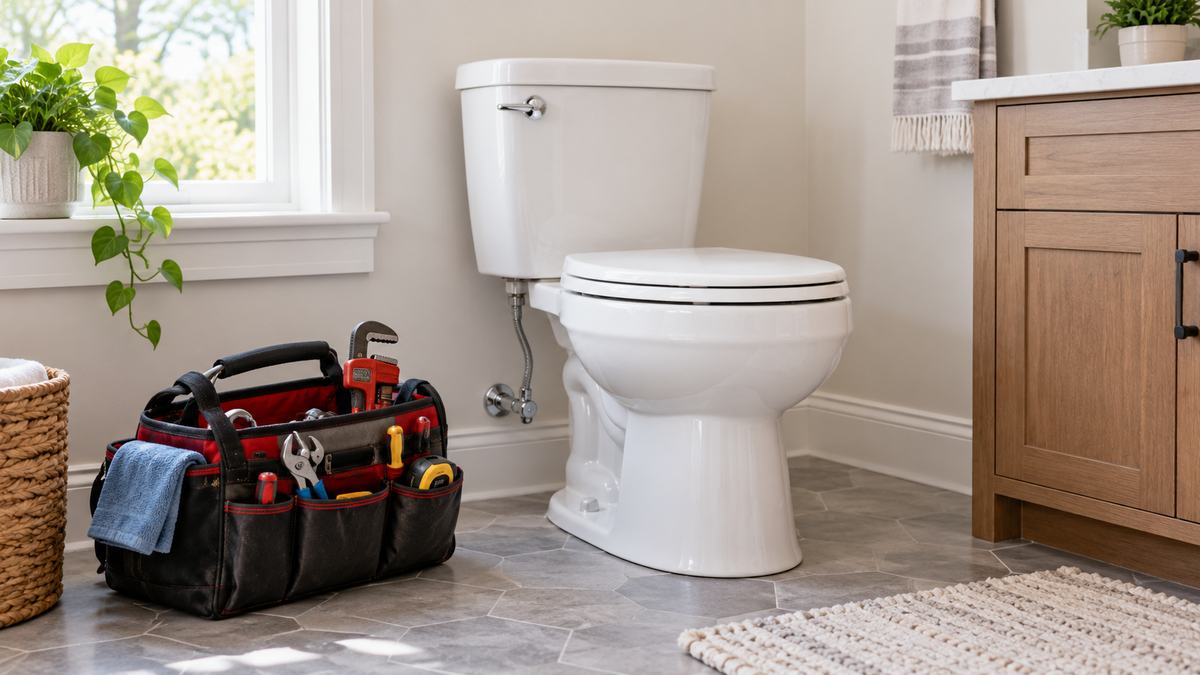
A toilet keeps running because water is leaking from the tank into the bowl or the tank never stops filling. The four usual causes are a worn flapper, a fill valve set too high or failing, a flapper chain that is too short or tangled, and a cracked overflow tube. Most are inexpensive parts, but a running toilet can waste hundreds of gallons a day until it is fixed.
Key takeaways
- Check the flapper first. It is the most common cause and the cheapest fix.
- If water is going down the overflow tube, the fill valve or float is set too high.
- A toilet that refills by itself every few minutes has a silent leak.
- Leaks around the base are a different problem and need attention quickly.
How a Toilet Tank Works (30-Second Version)
When you flush, the flapper lifts and the tank empties into the bowl. The flapper drops, the fill valve refills the tank, and a float shuts the fill valve off at the right level. If any of those steps fails, water keeps moving.
1. A Worn or Warped Flapper
Rubber flappers stiffen and warp with age and chlorine. Water seeps past them into the bowl, the tank level drops, and the fill valve kicks on to top it up. That is the “phantom flush” you hear at night.
Test it: add a few drops of food coloring to the tank and wait 15 minutes without flushing. Color in the bowl means the flapper is leaking.
Fix: shut off the supply valve behind the toilet, flush to drain the tank, and replace the flapper with one that matches your toilet’s flush valve size.
2. The Fill Valve or Float Is Set Too High
Lift the tank lid and look at the overflow tube, the open pipe in the middle. If water is spilling into it, the fill level is too high. Adjust the float down so the water stops about an inch below the top of the overflow tube. If adjusting does not stop the hissing, the fill valve is worn and should be replaced.
3. The Flapper Chain Is Too Short or Tangled
A chain with no slack holds the flapper slightly open. A chain that is too long can get trapped under the flapper. Aim for about half an inch of slack.
4. A Cracked Overflow Tube or Worn Flush Valve Seat
If a new flapper does not stop the leak, the seat it seals against may be pitted, or the overflow tube may be cracked. These usually mean replacing the flush valve, which involves removing the tank. Many homeowners call a plumber at this point.
Running Toilet vs. Leaking Toilet
Water on the floor around the base is not a running toilet. It usually means a failed wax ring or loose closet bolts, and it can rot the subfloor. Shut off the supply valve and have it looked at soon.
When to Repair and When to Replace
Most running toilets just need a part or two. If the porcelain is cracked, the toilet clogs constantly, or it is an older model using several gallons per flush, replacement may make more sense. See when to replace a toilet instead of repairing it.
Toilet Still Running After the Easy Fixes?
Our plumbers handle toilet repair and installation, from flappers and fill valves to wax rings and new installs. Call (610) 489-2717 any time, day or night, or book service online.
Frequently Asked Questions
How much water does a running toilet waste?
It depends on the leak. A slow flapper leak may waste a few hundred gallons a day; a fill valve stuck open can waste far more.
Is it safe to leave a toilet running overnight?
It will not cause immediate damage, but it wastes water. Turn off the supply valve behind the toilet until you can fix it.
Why does my toilet run for a few seconds every so often?
That is a classic sign of a silent flapper leak. Water slowly escapes into the bowl and the fill valve tops the tank back up.
Can I use any flapper?
No. Flappers come in 2-inch and 3-inch sizes and different styles. Match the size and type to your toilet’s flush valve.