To check your water meter for leaks, turn off every faucet and water-using appliance, note the meter reading or watch the small leak indicator dial, and wait one to two hours without using any water. If the reading changes or the indicator moves, water is leaking somewhere in your plumbing.
Key takeaways
- The leak indicator is usually a small triangle, star or wheel on the meter face.
- A moving indicator with all water off means a leak, even a small one.
- Closing the main valve during the test tells you whether the leak is inside the house or in the service line outside.
- Toilets are the most common source of silent leaks.
Where to Find Your Water Meter
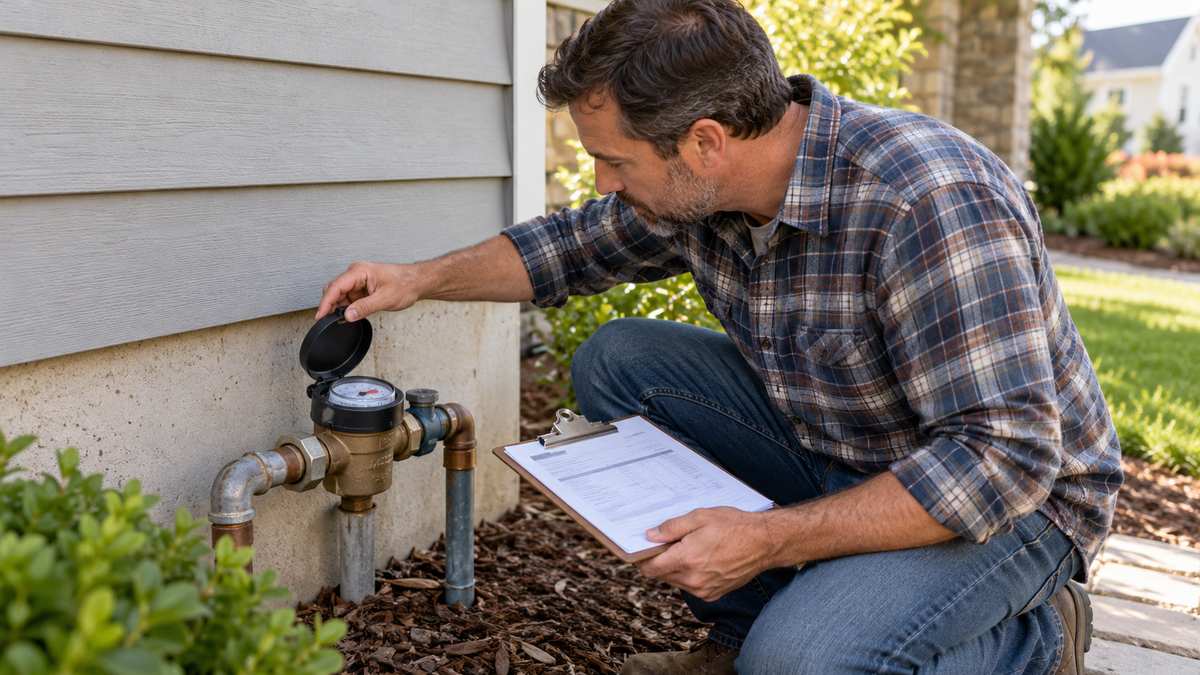
In most Montgomery County homes on public water, the meter is in the basement near where the water line enters, next to the main shut-off valve. Some homes have the meter in an outdoor pit near the curb, under a round lid. Homes on a private well do not have a water company meter; see the well section below.
How to Read the Meter
Most residential meters show a number in gallons or cubic feet, like a car odometer. Many also have a low-flow or leak indicator, a small red or black triangle, star or wheel that spins when even a tiny amount of water moves through the meter. That indicator is the fastest way to spot a leak.
The One-Hour Leak Test
- Turn off all water use. Faucets, showers, dishwasher, washing machine, ice maker, irrigation and water softener regeneration.
- Look at the leak indicator. If it is turning right now, you have a leak.
- Write down the reading or take a photo of the dial.
- Wait one to two hours without using any water.
- Check again. Any change means water is escaping.
Inside or Outside? Narrow It Down
If the test shows a leak, close the main shut-off valve inside the house (on the house side of the meter) and watch the indicator again.
- Indicator stops: the leak is inside the house. Check toilets, faucets, the water heater relief valve, and any visible pipes.
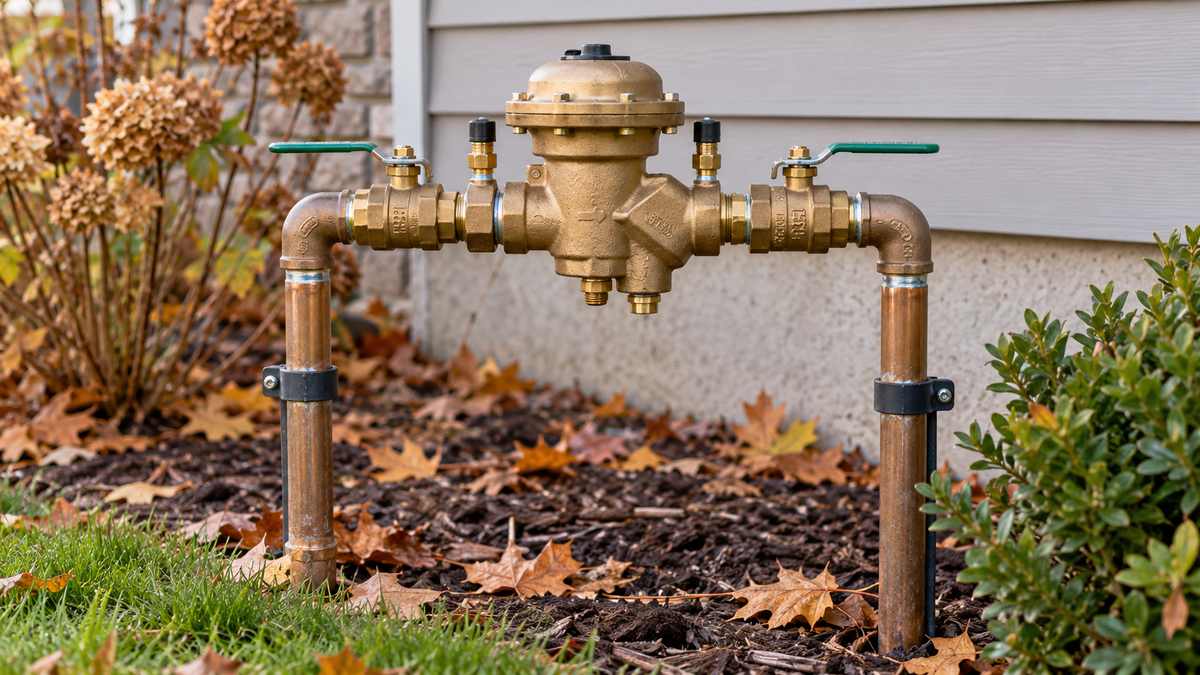
- Indicator keeps moving: the leak is between the meter and the main valve, or in the service line outside if the meter is at the curb.
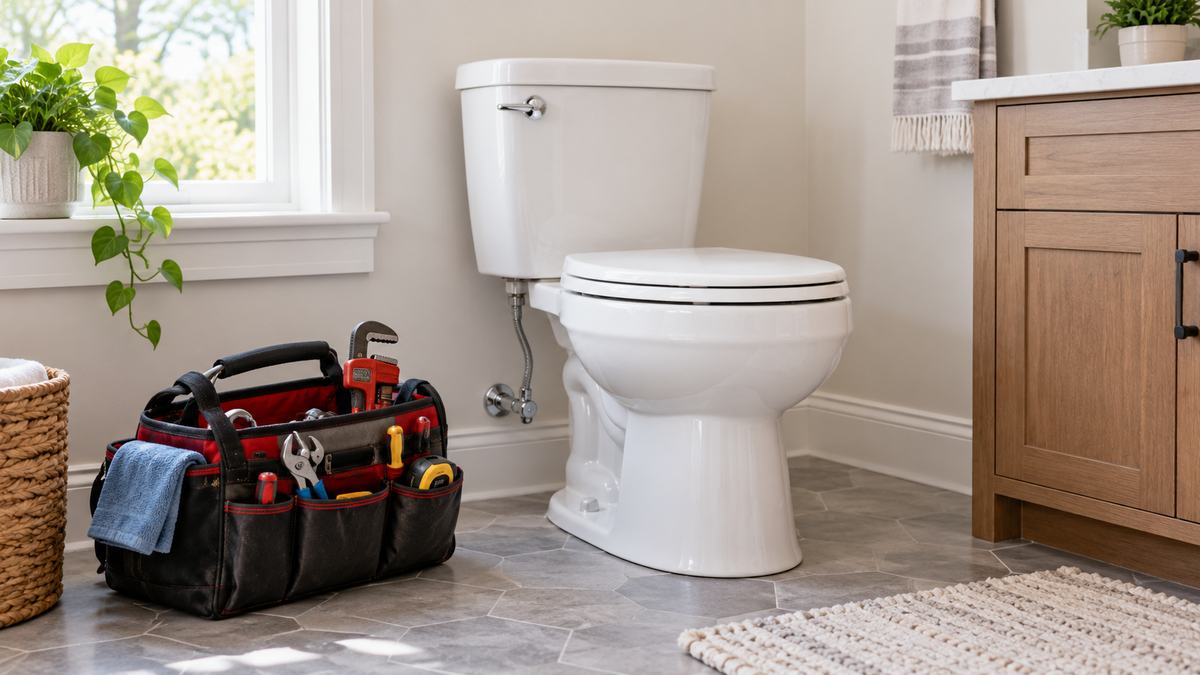
Check the Toilets First
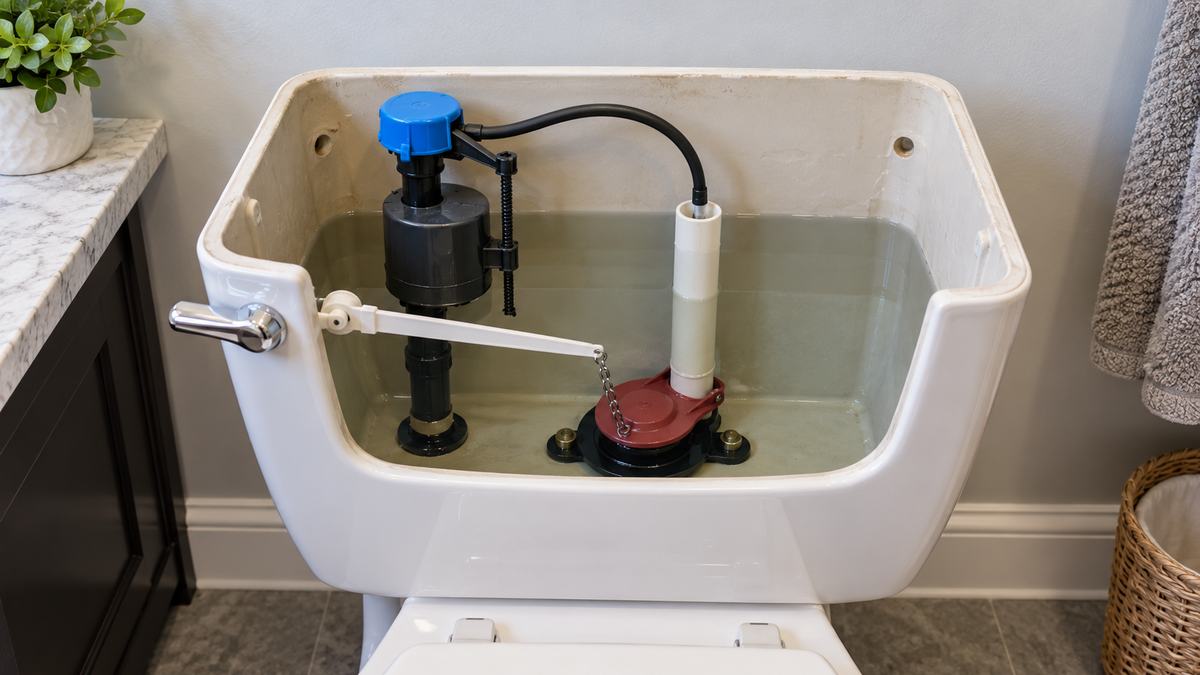
A worn flapper can waste a lot of water with no sound at all. Put a few drops of food coloring in the toilet tank, wait 15 minutes without flushing, and look in the bowl. Color in the bowl means the flapper is leaking. Read more in why your toilet keeps running.
If You Are on a Well
With no meter, listen for the well pump. If it kicks on when nobody is using water, or the pressure tank gauge drops slowly overnight, there is likely a leak or a problem with the tank or check valve.
When the Leak Is Not Obvious
If the meter says you have a leak but you cannot find it, the water may be escaping under a slab, inside a wall, or in the underground service line. That is when professional leak detection saves time, money and drywall.
Meter Moving but No Leak in Sight?
Our leak detection service pinpoints hidden leaks in walls, floors and service lines so the repair is targeted, not guesswork. Call (610) 489-2717 any time, day or night, or book service online.
Frequently Asked Questions
How do I know if my water meter has a leak indicator?
Look for a small triangle, star or wheel on the face of the meter, separate from the main reading. It spins whenever water flows.
How much water does a small leak waste?
More than most people expect. The EPA estimates household leaks can waste nearly 10,000 gallons of water a year in an average home.
Can a water softener make the meter move?
Yes, during its regeneration cycle. Make sure it is not regenerating when you run the test.
Who is responsible for a leak in the service line?
It depends on where the leak is and your water supplier’s rules. In many areas the homeowner is responsible from the curb stop to the house.