
A leaky faucet is usually caused by a worn washer, O-ring, or seal, a damaged cartridge, or loose parts inside the faucet. Less often, the culprit is a corroded valve seat or high water pressure. Many of these are simple fixes once the water is shut off, but some are best left to a plumber.
Key takeaways
- Find where the water comes from first: the spout, the handle base or under the sink each point to a different worn part.
- Most drips come from a worn cartridge, washer or O-ring, which are inexpensive parts.
- Always shut off the supply valves under the sink before taking a faucet apart.
Where Is the Leak Coming From?
Start by noticing where the water appears. It points you toward the cause.
- Dripping from the spout: Usually a worn washer, seal, or cartridge.
- Leaking around the handle: Often a worn O-ring or a loose packing nut.
- Water pooling at the base: Often worn O-rings on the spout or loose mounting parts.
- Water under the sink: Could be loose supply connections, a failing supply line, or a leaking shutoff valve.
Common Causes of a Leaky Faucet
1. Worn Washers, O-Rings, and Seals
Rubber parts take a beating every time you turn the faucet on and off. Over time they harden, crack, or flatten and stop sealing. In older compression faucets, the washer is the most common reason for a dripping spout.
2. Damaged Cartridges
Most modern faucets use a cartridge to control flow and temperature. Mineral buildup, debris, or plain wear can damage it. A failing cartridge may cause drips, stiff handles, or trouble getting the right temperature.
3. Loose or Stripped Parts
Handles, screws, and nuts can loosen with daily use. Plastic parts and screws can also strip. A loose packing nut or handle can let water seep out around the stem.
4. Corroded Valve Seats
The valve seat connects the faucet to the spout. Water sediment and minerals can corrode it, leaving a rough surface that a new washer can’t seal against. That’s why some faucets keep dripping even after a washer change.
5. High Water Pressure
If your faucets drip on and off, or several fixtures leak at once, your water pressure may be too high. Pressure above 80 psi puts extra strain on washers, seals, and supply lines. A plumber can test your pressure and install or adjust a pressure-reducing valve if needed.
Simple DIY Steps to Fix a Leaky Faucet
If you’re comfortable with basic tools, you can handle many leaks yourself. Take your time and keep the parts in order.
- Shut off the water. Turn the shutoff valves under the sink clockwise until they stop. Open the faucet to drain remaining water and confirm the supply is off.
- Plug the drain. Use a stopper or rag so small screws don’t fall in.
- Remove the handle. Pry off the decorative cap, then loosen the screw underneath. Some handles use a small set screw instead.
- Take out the stem or cartridge. Loosen the packing nut or retaining clip and lift it out. Take a photo at each step so reassembly is easy.
- Inspect and replace worn parts. Check washers, O-rings, and seals for cracks or flattening. Bring the old part or cartridge to the store to get an exact match.
- Clean as you go. Soak parts with mineral buildup in white vinegar, then rinse.
- Reassemble and test. Put everything back in reverse order, then slowly turn the water back on and check for leaks.
Don’t overtighten parts during reassembly. Snug is enough, and too much force can crack fittings or strip threads.
Why You Shouldn’t Ignore a Drip
A slow drip seems minor, but it wastes water every hour of every day and shows up on your bill. Leaks around the base or under the sink can also damage cabinets and flooring over time. Fixing a drip early is almost always easier than repairing water damage later.
When to Call a Plumber
Some leaks need more than a new washer. Call a licensed plumber if:
- The faucet still leaks after you’ve replaced the washer, O-rings, or cartridge.
- The valve seat is corroded or the faucet body is cracked.
- The shutoff valves won’t close or leak when you turn them.
- You see water under the sink, on the floor, or in the ceiling below.
- Several fixtures are leaking, which can point to high water pressure.
- Parts are stuck, stripped, or you can’t find a matching replacement.
Leaks that come back again and again are one of the signs it’s time to call a plumber. Sometimes a faucet is simply worn out, and replacing it is the better value. If you’re shopping for a new one, read our comparison of faucet handles vs knobs.
Faucet Repair in Royersford and Surrounding Areas
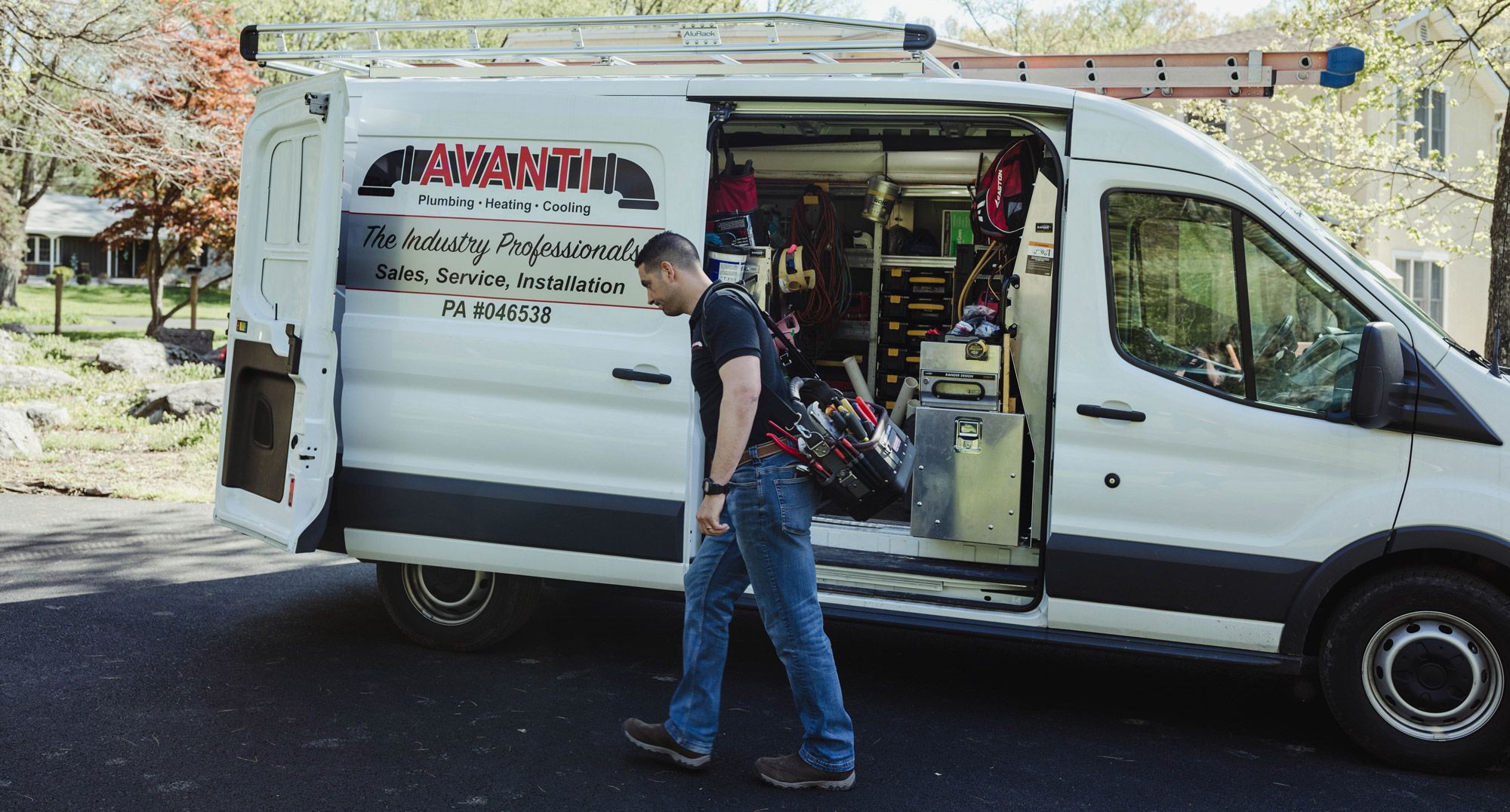
Avanti Plumbing & Drains is a family-owned, licensed and insured plumber based in Royersford, serving homes across Montgomery and Chester County since 2006. Whether you live in Pottstown, Lansdale, or Wayne, our technicians arrive with fully stocked trucks, explain your options before starting, wear shoe covers, and leave the area clean. Learn more about our plumbing repair services.
Older homes in Montgomery County often have faucets and shutoff valves that are decades old, and those valves can seize or start leaking the first time they are turned. Our plumbers repair and replace faucets in Royersford, Collegeville and Phoenixville, and our trucks carry common cartridges and valves.
Tired of that drip? Call Avanti Plumbing & Drains at (610) 489-2717 or book service online. We’re available 24/7 with same-day and after-hours service.
Related Reading
Frequently Asked Questions
Can I fix a leaky faucet myself?
Often, yes. Many leaks come from worn washers, O-rings, or cartridges that are inexpensive and easy to replace. Always shut off the water under the sink first. If the leak continues after replacing parts, or the valve seat or faucet body is damaged, call a plumber.
Why does my faucet still drip after I replaced the washer?
The valve seat may be corroded or rough, so the new washer can’t seal against it. A damaged cartridge, the wrong replacement part, or high water pressure can also keep a faucet dripping.
Can high water pressure cause a leaky faucet?
Yes. Pressure above 80 psi puts extra strain on washers, seals, and supply lines, which can cause drips or leaks. A plumber can test your pressure and install or adjust a pressure-reducing valve if needed.